
What Makes a Transition “Community-based”?
A transition is truly community-based when support is built around the person’s everyday life, including their home, neighbourhood, relationships, and preferred routines, rather than around the overgeneralised institutional routines. The focus shifts from discharge from the hospital to belonging in the community through:
- coordinated health and social care support
- practical support at home for multiple and mental health needs
- meaningful activities that help the person live, not just cope
In community-based transitions, the person is supported where they live and spend the most time, which is their own home, supported living, or local community setting, with services wrapped around them, instead of them being wrapped around services. Family members and unpaid carers, who already provide emotional support, practical help and advocacy, become central to planning and decision-making, alongside clinicians, support workers, and commissioners. This shared approach mirrors what the Commissioning Cycle describes as “coproduction”: citizens and professionals sharing experience and knowledge to design support that genuinely fits people’s lives.
Why Family and Caregiver Involvement Matters
Family and caregivers carry knowledge, history, and daily experience that no professional record can fully capture. Making them an essential part of the community transition support plan and the whole process does three vital things:
- II protects the continuity of care
- Adds rich context to clinical information
- Strengthens communication between services and the person being supported

Providing Continuity of Care During Change
Hospital discharge and transition represent a life transition and can feel like a sudden change in who is around the person: ward staff step back, new care teams arrive, and routines shift. Families and long-term carers provide a deeper understanding and a thread of continuity through all of this. They remember what has worked in previous crises, how the person copes with change, and what small details help them feel safe. And it can simply reflect the following:
- favourite routines
- preferred foods
- familiar places
- people they trust
When community transition teams actively include family carers, the person experiences the transition not as a series of disconnected services, but as a joined-up journey in which at least some relationships remain constant.
Helping Professionals Understand the Person Beyond Their Care Records
In community living, medical notes, risk assessments and care plans are essential, but they are never the whole story. Family members and unpaid carers carry everyday knowledge that fills in the gaps:
- What a good day looks like for the person
- Early signs that they are becoming anxious or unwell
- What helps them calm down and feel safe
- Which environments or interactions tend to trigger distress
This kind of insight cannot be captured fully in a document. When professionals take time to listen to families and carers, and treat their knowledge as expertise, not background information, transition plans become more accurate, more humane, and far more likely to hold in real life and provide successful community transition.
The Role of Families During the Transition Process
Families are often present long before any service is involved and remain long after formal support ends. In community transition services, their role spans several crucial areas.

Historical and Personal Context
Families bring the person’s history and insights that a standard medical chart cannot capture into the room: how long have they been unwell, what has helped in the past, what has made things worse, and which previous services have succeeded or failed, including:
- personal preferences
- cultural and spiritual beliefs
- how the person expresses pain, fear, or joy
- what home means to them in practice
Providing Emotional Support
Leaving the hospital setting or changing placement can be frightening. Healthcare professionals can offer reassurance, but emotional safety often comes from the people the person already loves and trusts. Families provide:
- reassurance when the person is worried about coping at home
- encouragement to try new routines or activities
- a sense of belonging when everything else feels unfamiliar
This emotional support is a core part of recovery and helps anchor the person while new service relationships are still forming.
Supporting Communication Between Services
Families frequently act as the bridge between community health services, including hospital teams, community mental health, GPs, social care, and healthcare providers, as they:
- clarify information that the person may not remember or understand
- bring concerns to professionals early, before issues escalate
- help ensure that changes in medication, risk, or needs are shared across teams
Commissioning guidance emphasises that involving carers in consultation and coproduction improves service design and reduces the risk of services becoming disconnected from people’s real lives.
The Role of Caregivers in Community-Based Support
Unpaid carers and paid caregivers, such as community support workers, are central to making community care and support look and feel real in everyday life. They translate plans into actions, hour by hour, in the person’s home and community.
Assisting with Daily Living Skills
Community life is built on everyday tasks: washing, dressing, cooking, managing money, attending appointments, travelling, and socialising. Caregivers help the person do these safely and with greater independence through a person-centred approach.
For people leaving the hospital after long stays, daily living skills may have faded or changed. Carers break tasks into manageable steps, practise them patiently, and celebrate progress, turning transition from a purely clinical event into a genuine return to ordinary life.
Reinforcing Care and Support Plans
Personalised care plans, Positive behaviour support (PBS) plans, and safety plans only work if they are lived out consistently. Caregivers should:
- follow agreed strategies for de-escalation and calming
- support medication routines and health monitoring
- help implement structured timetables, sensory adjustments and communication approaches recommended by clinicians and therapists
In the community transition process, caregivers are often the first ones to spot when a plan is unrealistic or not working in practice, and their feedback is vital for adjusting support.
Monitoring Wellbeing and Progress
Because carers spend most of the time with the person, they are well placed to notice subtle changes in mood, behaviour, sleep, appetite, or engagement. These early signs are often the first indicators that someone is starting to struggle or doing better.
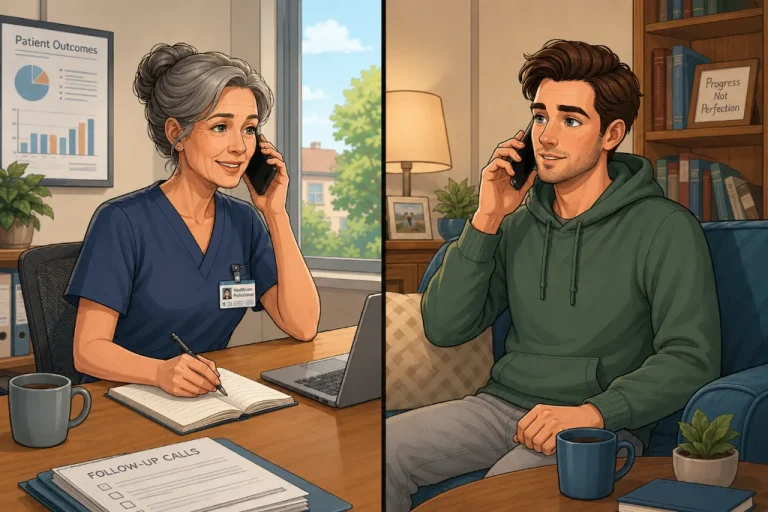
When caregivers feel confident to report these changes and are listened to by services, transitions become safer and more responsive. Issues can be addressed before they become crises, and positive progress can be recognised and built upon.
How Collaborative Partnerships Improve Outcomes and Quality of Life
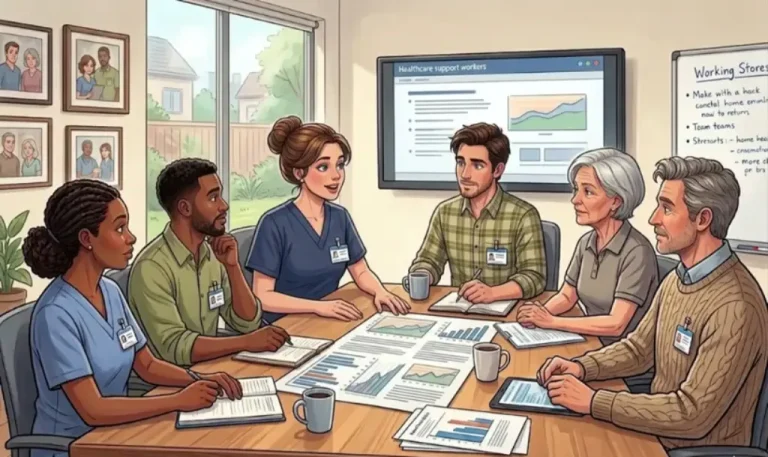
When families, caregivers, and healthcare professionals work as true partners, sharing information, decision-making and responsibility, outcomes improve in ways that show up both clinically and personally. They collaborate closely in:
- reducing hospital readmissions, because risks are identified earlier and addressed in the community
- improving adherence to treatment and support plans, as the person sees that everyone around them is aligned and respectful of their goals
- building trust, as people and families feel heard and valued, making them more willing to engage openly when things get difficult
At a quality-of-life level, partnership means the person is supported not just to be safe but to live a life that feels meaningful. Families can advocate for activities and roles that matter, volunteering, work, education, hobbies, relationships, while caregivers and professionals help remove practical and emotional barriers.
Community Transition Services with Nurseline Healthcare
Nurseline Healthcare’s Community Transition Services are built on the belief that nobody transitions alone. Our teams work alongside families and caregivers from the earliest planning stages through to stable community life, treating them as essential partners, not as add-ons. In practice, this means:
- Involving families and carers in discharge and transition planning meetings.
- Listening carefully to their knowledge of the person’s preferences, history and early warning signs.
- Designing support plans that make sense in the context of real home life, not just service pathways.
- Staying in close contact with families throughout the transition, adjusting support when they tell us something is not working.
By combining clinical expertise with the lived knowledge of families and carers, Nurseline Healthcare helps autistic people, people with a learning disability or mental health challenges move from hospital care to community living in ways that feel safer, more personal, and more sustainable. Our multidisciplinary team includes Community Psychiatric Nurses, Registered Mental Health Nurses, PBS practitioners, occupational therapists, care coordinators, and support workers, all working together to provide wraparound support that is tailored to the individual and responsive to change.
For commissioners and providers, this partnership approach not only improves outcomes and reduces readmissions but also honours what most families have been asking for all along: to be part of the team and to help shape a future that genuinely fits the person they love.
If you are looking for a specialist partner to help reduce readmission, prevent placement breakdowns, and improve community outcomes, contact our team today.