
Key Takeaways
- Leaving the hospital is one of the most emotionally and psychologically demanding transitions a person can make, and for people with complex mental health needs, learning disabilities, or autism, the risks of an unplanned or rushed discharge are significant.
- Discharge planning should begin at or before admission, not in the final days of an inpatient stay. The earlier the process starts, the calmer and safer it becomes, and the more it reduces health inequalities.
- A person-centred transition plan, coproduced with the individual, their family, and the multidisciplinary team, is the single most importanт tool for reducing anxiety and preventing breakdown.
- Preparing the community environment before discharge is essential: the right home setup, sensory considerations, and support infrastructure reduce the shock of the transition and lower the likelihood of early crises.
- Positive Behaviour Support (PBS) should be embedded in the transition plan from the outset, rather than introduced reactively once things have gone wrong.
Why Transitions from Inpatient Care Can Be Challenging?
Hospital discharge is not the end of a person’s care journey. Moreover, it is the beginning of a more complex and delicate process that requires careful planning and the right support. Because what looks straightforward on paper can quickly turn into a hospital readmission.
The challenges of moving from inpatient care to community living are numerous. People leaving a hospital setting are stepping out of a tightly structured world into one that offers far less external regulation. The daily routines that provided predictability on the ward, the familiar faces of the care team, the physical security of a contained environment: all of these disappear at once. For people who already struggle with uncertainty, change, or sensory overwhelm, that sudden shift represents a genuine clinical risk – one that careful planning can substantially reduce, but that no amount of goodwill alone can eliminate.
Discharge from acute inpatient mental health care is one of the highest-risk periods in a person’s care pathway, associated with elevated rates of relapse, self-harm, crisis contact, and, in the most serious cases, suicide. NHS England’s statutory guidance on discharge planning should begin at or before admission, be collaborative amongst social workers, hospital teams, and community care teams, be person-centred throughout, and ensure that community support is genuinely in place before the person leaves. The gap between what the guidance requires and what frequently happens in practice is where transitions go wrong.
Leaving Hospital as a Major Change
For most people, leaving the hospital and the care transition that follows after a significant mental health admission is a major life change, carrying emotional and psychological weight that the clinical system does not always fully acknowledge.
The emotional complexity of discharge is often underestimated. On one hand, you get the relief, the anticipation of returning home, reconnecting with family, rebuilding independence. On the other hand, you get the fear: fear of managing without the safety net of the ward, fear of the triggers and circumstances that led to admission in the first place, and fear of failing in the community and ending up back in hospital.
These feelings coexist, and they can shift rapidly, sometimes even within the same hour. For people with a history of multiple admissions, the emotional landscape is further complicated by a loss of trust: trust in their own abilities to stay well, trust in the services that have not always caught them in time, and sometimes trust in the family members whose relationships have been strained by the period of illness.
Psychologically, inpatient care, even when experienced as restrictive or distressing, provides a form of containment that is difficult to replicate in the community. When that containment is removed, the psychological work of managing anxiety, emotion, and daily functioning falls back to the person themselves, often before they are fully ready to do so.
Why Does Anxiety Often Increase During Discharge?
Anxiety during and after discharge is not a sign that something has gone wrong. It is a predictable, understandable response to a significant change in circumstances. The question is not whether anxiety will arise, but how well the transition plan anticipates and addresses it.
Several factors consistently drive elevated anxiety during discharge. Uncertainty about the future is central:
- Where will I live?
- Who will support me?
- What will happen if I struggle?
For people who have not been involved in their own discharge planning, these questions can feel unresolvable, and the anxiety they generate can actively destabilise a person in the days and weeks after discharge. Abrupt or poorly communicated transition compounds the effect.
NICE guidance states that at least 48 hours’ notice of discharge should be given, as it allows time for people to prepare practically and emotionally. Where that notice is not given, or where the discharge environment has not been properly prepared, anxiety is almost inevitable.
There is also the question of identity and routine. On the ward, roles and expectations are clear. In the community, the person must reconstruct their daily life largely from scratch:
- Reconnecting with relationships that may have become strained,
- Navigating practical challenges around housing and finances,
- Rebuilding a sense of who they are outside of the patient role.
Importance of a Well-Planned Transition
Quality community health services know the importance of a well-planned transition – it brings huge differences in outcomes, positive experiences for the person, and its long-term impact on their recovery.
When discharge planning begins early, and it involves the person and their family at every stage, the outcomes are measurably better across almost every indicator:
- Lower readmission rates,
- Better health outcomes,
- Better medication adherence,
- More stable housing,
- Stronger social connections,
- More confident, capable experience of daily life.
A well-planned transition process also reduces the burden on families, who are often left managing crises that adequate planning would have prevented. It reduces demand on crisis services, which too often become the default support when community services are poorly matched to the needs of the supported person. And most importantly, it affirms to the person themselves that the transition has been carefully considered: people from the community care team who know and understand them have prepared the community setting where they are stepping into. They are health professionals who are there for them every time they need support.
Early Discharge Planning
Early discharge planning begins at or even before admission and continues as a living, evolving process throughout the inpatient stay. In practice, this means identifying the person’s community needs, home circumstances, and support requirements from the outset. It means:
- Allocating a care coordinator early,
- Communicating with community services before the discharge date arrives,
- Working with the person to co-produce a transition plan that they understand, trust, and feel ownership over.
Gradual preparation should be implemented to reduce anxiety, including familiarisation visits to the new home setting and introductions to community support workers before discharge, thereby reducing the shock of transition and incrementally building the person’s confidence. This way, the discharge planning would feel like a natural next step rather than an abrupt ending.
Rushed or unsafe discharges, by contrast, carry a predictable risk of early breakdown. People return to communities they are not prepared for, with mental health support that has not been properly arranged, and the result is crisis, readmission, and the compounding harm of repeated failed transitions.
Creating a Person-Centred Transition Plan
A person-centred transition plan is the operational heart of a well-managed discharge. It is the document that translates the values of person-centred care into a practical, agreed, and regularly reviewed guide to how the transition process and the services provided will unfold.
Effective transition planning begins with a genuine understanding of the individual’s needs and preferences, their relationships, their community style, and the specific circumstances and experiences that contribute to their mental health difficulties. The plan must reflect:
- Who the person is,
- What matters to them,
- And what a good and difficult day actually looks like for them.
This understanding comes from direct conversations with the person, their family, and the clinical and community care provider teams who are working alongside them. Identifying triggers and anxiety factors, such as the situations, environments, sensory experiences, and relational dynamics that tend to destabilise the person, is a must, as it allows the transition plan to build proactive strategies around known risks rather than responding to crises after they have occurred.
Setting realistic, collaborative goals and expectations is equally important here. Transition planning that sets expectations too high or imposes goals the person does not share creates the conditions for early failure and the loss of confidence that follows. Goals should be meaningful to the person, achievable in the early stages of community life, and structured to build momentum rather than demonstrate compliance. A plan that the person feels genuinely part of, that reflects their voice, priorities, and understanding of what they need, is far more likely to hold up under the pressure of real community living than one written around them without their active involvement.
Involving the Individual in Decision-Making
The most powerful thing a transitional care model can do for a person’s anxiety is demonstrate, clearly and concretely, that they are involved in the decision-making in their own live, and the discharge is happening with them, not to them.
Promoting genuine choice and control during the transition process lies at the core of a personalised care plan and a successful transition. When people feel that the decisions shaping their community life reflect their own preferences and values, their confidence in their ability to manage that life increases. They are more likely to engage with support, communicate early when things are difficult, and use the coping strategies identified in the transition plan. This requires healthcare professionals to slow down, to create genuine space for the person to speak and be heard, and to tolerate the messiness of decisions that do not always fit neatly into care pathways.
Comprehensive support also requires honesty. Where genuine choice is constrained by legal, clinical, or resource factors, the person deserves a clear and respectful explanation. Trust, once built through this kind of transparency, becomes one of the most protective factors for a smooth transition and successful healthcare delivery.
Preparing the Community Environment
The environment a person moves into is an active determinant of how they feel, how safe they are, and how quickly they can begin to stabilise and grow.
Preparing the physical living space before discharge means more than ensuring a bed is available. For people with sensory sensitivities, common in autistic people, people with trauma histories, and those with complex health needs, the wrong environment can be a direct trigger for distress:
- Bright overhead lighting,
- Noise from neighbours,
- Cluttered or unfamiliar spaces,
- Lack of private, calming areas.
A thorough environmental assessment should be conducted by the transition team, including occupational therapy and essential services, before the person moves in to identify and address trigger factors in advance. This might mean adjusting lighting, providing sensory aids, decluttering communal areas, or establishing clean and quiet spaces.
Practical and organisational support infrastructure around the person should also be put in place to provide a smooth and safe transition in community-based settings. Healthcare providers should confirm the community mental health team contacts, arrange the medication supply, and introduce key support workers.
Managing Transports and Transitions with Care
The journey from hospital to home care marks the first moment of transition, and for many people, it sets the emotional tone for everything that follows.

Transport and the physical act of leaving the hospital are the frequently underestimated sources of anxiety. Long waiting times before departure, uncertainty about what is happening, changes to medication schedules caused by travel delays, and the sensory demands of a journey, such as noise, unfamiliar vehicles, and the disorientation of moving through public spaces after a period of inpatient care, can all heighten distress before the person has even arrived at their home setting.
Planning transport carefully means confirming arrangements well in advance, ensuring the person knows exactly what will happen and when, minimising waiting times through coordinated care and communication between the ward and the receiving team, and ensuring that medication schedules are protected and not disrupted by travel logistics. Where possible, the journey should be made with a familiar member of the care team, someone the person knows and trusts, rather than a stranger driving them to a new, mostly unknown address.
Supporting Mental Health During Transition
The period immediately following discharge is one of heightened psychological vulnerability, and active mental health support during this time is essential. It requires a proactive, early-intervention approach that good community mental health care is built upon. This means identifying the person’s early warning signs and ensuring that the support team around them knows what to look for and how to respond.
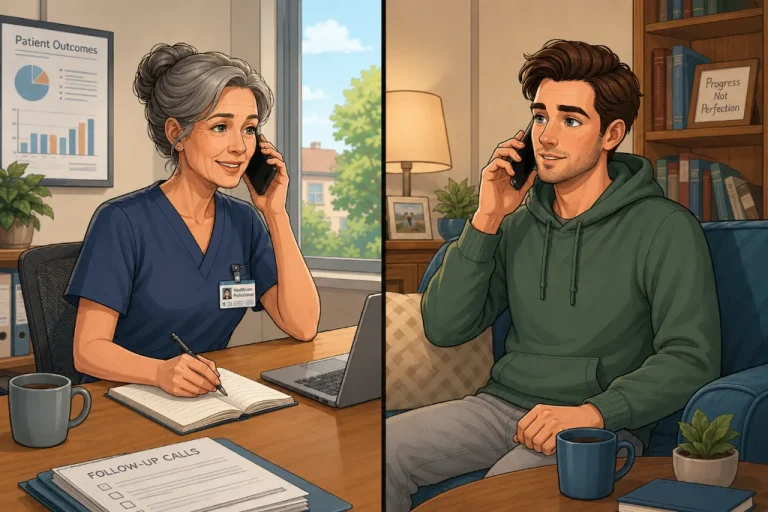
Regular, structured emotional wellbeing check-ins in the early weeks of community living are mandatory. They communicate that the person’s emotional experience matters, that distress will be noticed rather than missed, and that help is available before things reach a point where crisis intervention becomes necessary. MHS England’s requirement that post-discharge follow-up occur within 72 hours of leaving the hospital clearly reflects the evidence base: the days immediately after discharge are when risk is highest, and proactive contact and adequate support during this window save lives.
Implementing Proactive Positive Behaviour Support (PBS)
Positive Behaviour Support is a proactive framework for understanding a person’s needs and building the conditions in which they can thrive. Applied to community transitions, it transforms discharge from a clinical event into a foundation for long-term recovery and well-being.
Before discharge, PBS-informed planning during hospital care should involve a comprehensive strategy and functional assessment of the person’s behaviours of concern:
- Understanding what triggers distress,
- What those behaviours are communicating,
- And what environmental and relational adjustments would reduce the likelihood of them occuring in the community settings?
This assessment should inform every element of the transition plan, from how the home environment is prepared to how support workers communicate with the person to what daily routines look like in the first weeks of community life. The PBS plan is developed during the inpatient stay, in collaboration with the person and their family, to ensure that the community team inherits a working understanding of the person rather than starting from scratch at discharge.
After discharge, PBS continues as a living framework rather than a static document. In the early weeks of community living, the team monitors for changes in behaviour and emotional well-being, reviews the effectiveness of proactive strategies, and adjusts the environment or support approach when the evidence suggests something is not working.
Nurseline Healthcare’s PBS specialists and PROACT-SCIPr-UK®-trained support workers apply this framework consistently, ensuring that the least restrictive, most therapeutic response is the default at every stage of the transition, and that incidents, when they occur, become opportunities for learning and improvement rather than evidence of failure.
The Role of Specialist Community Transition Providers
At Nurseline Healthcare, we built our Community Transition Services around a single, non-negotiable belief: that people with complex care needs deserve a service that knows them before they leave the hospital, has prepared their community environment with care, and is ready to respond from the moment they arrive home. A specialist community transition provider does not simply provide care in the community; they guide the entire transition, from the planning stages through discharge and into the weeks and months beyond, with the consistency and expertise that complex needs require.
Bridging the Gap Between Hospital and Home
The gap between hospital and community settings is clinical, relational, and psychological. Specialist community transition providers bridge it by working across both settings simultaneously, engaging with the inpatient team during the discharge planning phase, preparing the community environment and support infrastructure before the person leaves, and ensuring that the first days of community life are met with familiar faces, clear routines, and responsive support.

Nurseline Healthcare teams are active participants in discharge planning meetings, contributing clinical knowledge of community risk management and PBS-informed practice to conversations that too often take place without specialist community input. This results in a discharge for which both sides of the transition are genuinely ready.
Intensive Support for Complex Needs
For people with complex mental health conditions, learning disabilities, autism, or co-occurring needs, standard community health services are frequently insufficient to support the transition safely. A specialist community transition services provider offers intensive, multidisciplinary team support, including registered mental health nurses, community nurses (where needed), PBS practitioners, occupational therapists, and experienced support workers, all of whom are required for complex presentations.
Nurseline Healthcare’s Community Transition Services begin with intensive, front-loaded and ongoing support during the highest-risk period and gradually step down as stability grows and the person’s confidence in their community life develops. This graduated approach avoids the double risk of over-dependency and premature withdrawal, and ensures that the reduction in support reflects real evidence of the person’s wellbeing.
Preventing Placement Breakdown and Readmission
The cost of placement breakdown is one of the most preventable losses in health and social care. For the person, it means another failed transition, another period of inpatient care, another reset to a process that erodes confidence and trust with each repetition. For commissioners, it means the compounding cost of readmission, repeated discharge planning, and the increasing complexity of a person whose needs have grown in the absence of successful community support.
Specialist community transition providers prevent breakdown by anticipating it through:
- Proactive PBS planning,
- Early warning sign monitoring,
- Crisis planning,
- Rapid response capability to act before a situation becomes unmanageable.
Nurseline Healthcare operates a 24/7 model precisely because placement breakdown does not wait for office hours, and because the ability to respond quickly, with clinical skill and a calm, human presence, is the difference between a crisis managed and a placement lost.
Community Transition Services With Nurseline Healthcare
Nurseline Healthcare’s Community Transition Services are designed for the moments when standard care is not enough:
- When a person’s situation is too complex,
- Too high-risk,
- Too layered for a traditional community health service to hold safely.
We work with people with mental health needs, learning disabilities, autism, and co-occurring needs, providing person-centred care, clinically informed support from the early stages of discharge planning through to stable, confident community living.
Our multidisciplinary teams, including registered mental health nurses, PBS specialists, occupational therapists, and experienced support workers, are carefully matched to each individual and the specific demands of their transition. We work in close partnership with NHS trusts, Integrated care boards, local authorities, and families to ensure that every transition is well planned, consistently delivered, and honestly reviewed.
If you are supporting someone through a community transition or commissioning specialist transition services and want to understand how Nurseline Healthcare can help, we would welcome the conversation. We are experienced at engaging early, working flexibly, and holding transitions that other services find difficult.
Get in touch with our team today to find out how we can work together to give the people you support the best possible start in community life.