What Discharge Planning Involves?
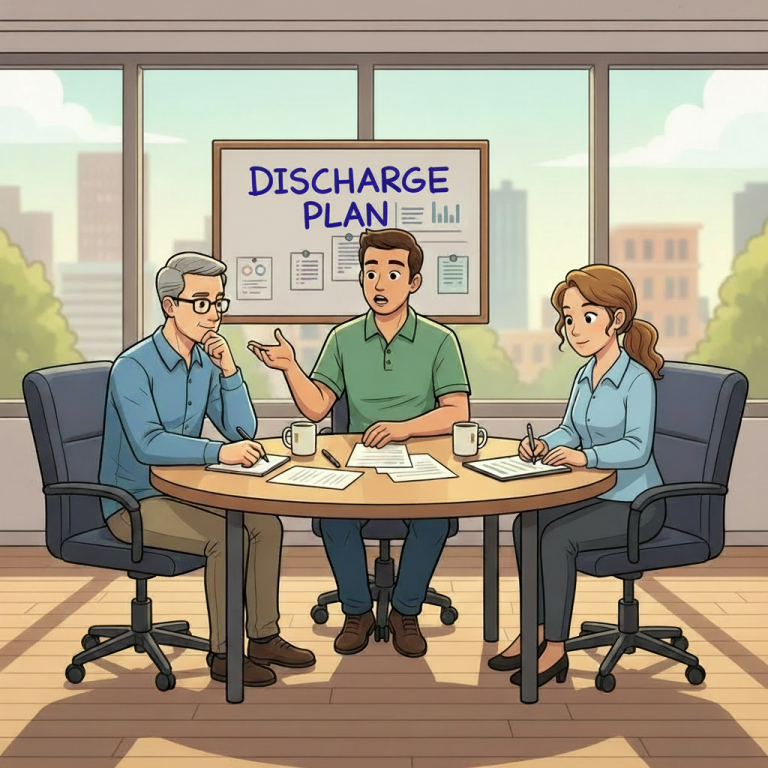
Discharge planning is the structured process of preparing a person for a safe, supported move from an inpatient mental health setting back into the community. It begins not at the point of departure, but from the moment of admission, and it draws together health, social care and community services into a shared plan built around that person’s needs and circumstances.
A thorough discharge plan covers a wide range of matters. It includes a comprehensive assessment of the person’s medical, psychological, and social circumstances, such as what support they will need at home, what risks are present, and what services should be in place before they leave the hospital. Key elements typically include:
- Arrangements for ongoing medication and prescribing responsibility
- Follow-up appointments with the person’s GP or community mental health team
- Referrals to relevant services such as counselling, occupational therapy, or substance use support
- Clear communication of the care plan to all parties involved, including the person themselves and their family or carers
- Crisis planning, identifying early warning signs and setting out a clear course of action if the person’s mental health deteriorates
The goal is for no one to leave the hospital without a clear, agreed-upon, and accessible plan for what comes next.
The Role of Multidisciplinary Teams in Creating the Care Plan
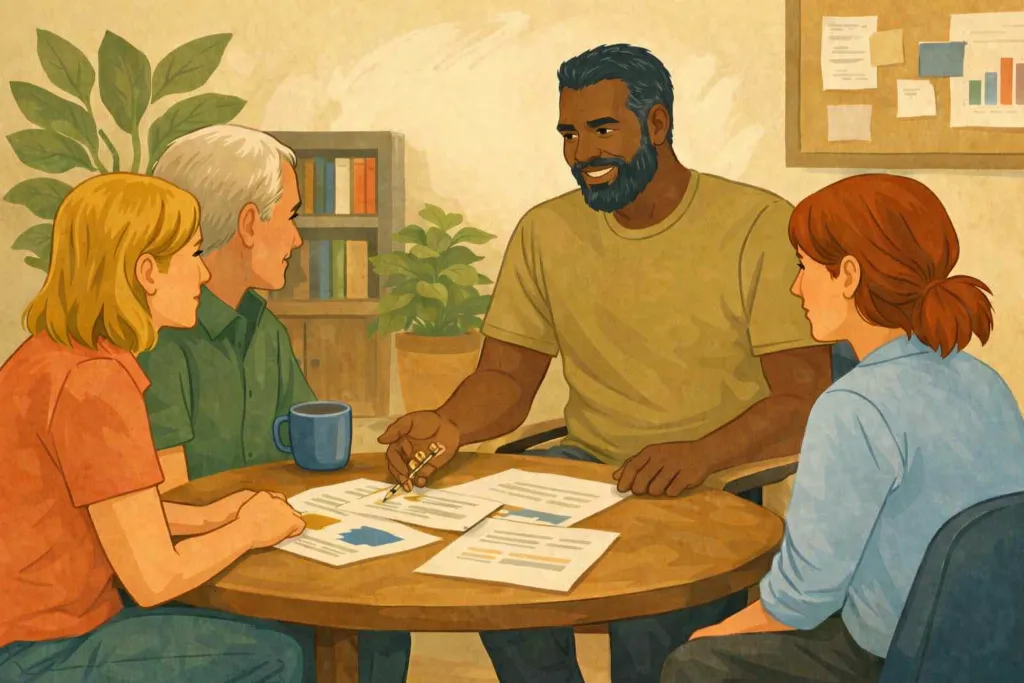
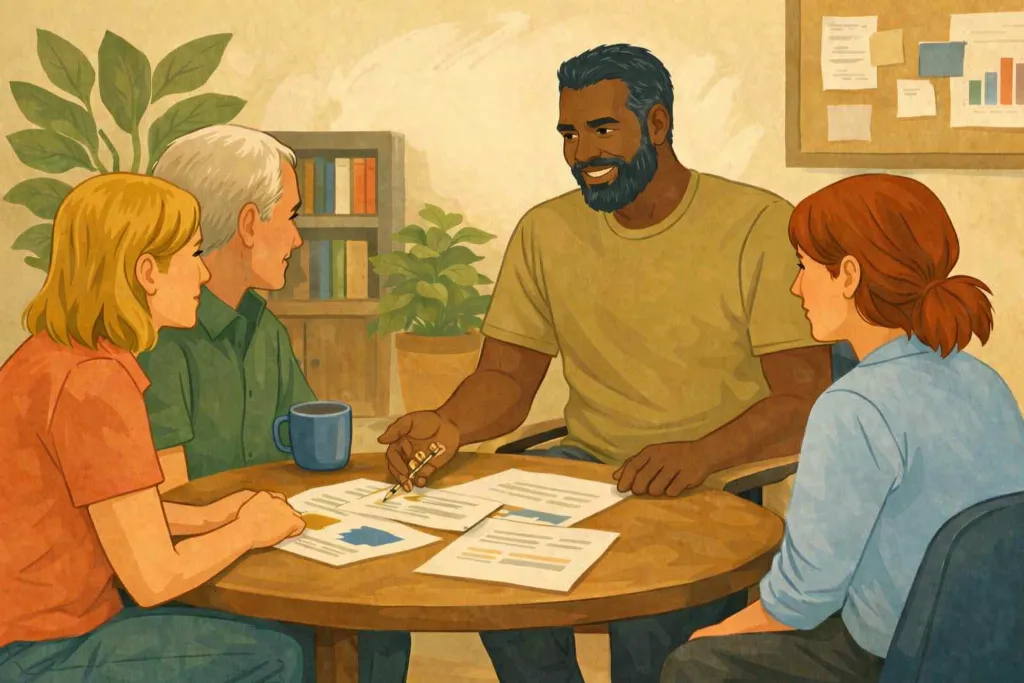
Multidisciplinary teams (MDTs) are at the heart of an effective discharge process. These teams bring together professionals from across healthcare and social care, including psychiatrists, nurses, social workers, occupational therapists, psychologists, and community psychiatric nurses (CPNs), to form a shared view of the person’s needs. When MDTs function well, they do more than coordinate logistics; they ensure that the full picture of a person’s life is considered. A social worker may flag housing concerns that a psychiatrist would not otherwise be aware of. An occupational therapist can assess whether the person’s home environment is suitable for independent living. A CPN can begin building a relationship with the person before they leave hospital, reducing disruption during the transition between services. This joined-up approach is what transforms a discharge plan from a paper exercise into something that genuinely supports a person’s recovery.
Why the Post‑Discharge Period is So Risky?
The weeks immediately after discharge from a mental health ward represent one of the highest-risk periods in a person’s recovery. Research involving 231,998 people discharged from NHS acute mental health services in England found that 21.4% were readmitted within six months, with a median time to readmission of just 34 days.
Several factors explain why this period is so risky. In a hospital, people benefit from consistent monitoring, structured routines, immediate access to clinical staff, and a contained therapeutic environment. When those structures are removed, and often quite abruptly, people can be left without the immediate support required to manage their mental health day to day. It is even noted that there is a heightened risk of suicide in the first three months following mental health discharge, and that people frequently require coordinated input from multiple services, including community mental health teams, GPs, and social services, during this period.
Emotional and Psychological Challenges After Discharge
Anxiety is one of the most common mental health conditions that arises in the post-discharge period, especially in young people. Returning to everyday life, with its relationships, responsibilities, and stressors, can feel overwhelming after a period spent in a structured care environment. People may worry about their ability to cope without the daily presence of clinical staff, about what others will think of their hospital stay, or about facing the same circumstances that contributed to their admission. Some people also experience anxiety about stigma, the fear that others in their community, workplace, or family will treat them differently following a period of inpatient mental health care.
Fear of relapse is closely tied to anxiety. People are often acutely aware that their mental health may be fragile, and this awareness can itself become a source of distress. Any change in mood, sleep pattern, or energy levels may be interpreted as a warning sign, even when it reflects normal adjustments. Without accessible, responsive support in the community, the fear of relapse can become self-reinforcing, as stress rises and the person withdraws from seeking help, their risk of deterioration increases. Clear crisis planning, regular check-ins, and open conversations about early warning signs can help people hold these fears without being overwhelmed by them.
Loneliness and isolation present a particularly serious challenge. After discharge, many people return to living alone or to family and social environments that may not be well equipped to offer adequate emotional support. For those who have experienced disconnection from social networks, a common consequence of prolonged mental health deprivation, reengagement can feel uncertain or uncomfortable. Social isolation is a significant predictor of poor outcomes following mental health discharge. It can deepen depression, reduce motivation to engage with community support, and increase the risk of crisis. Peer support groups, voluntary sector befriending services, and structured community activities can all play an important role in reducing this isolation during the post-discharge period.
Housing and Accommodation Challenges
Accommodation shortages present a persistent barrier across much of England. The shortage of supported housing and specialist mental health accommodation means that people are sometimes discharged before appropriate housing is in place. NHS England has acknowledged that high numbers of delayed discharges from mental health wards are linked directly to housing problems, with some NHS Foundation Trusts reporting this as a leading cause of people remaining in hospital beyond what is clinically necessary. The absence of suitable housing at the point of discharge results in people returning to environments that may directly undermine their recovery, and, in some cases, to the same circumstances that preceded their admission.
Unsuitable living conditions carry their own significant risks. A person returning to a chaotic, isolating, overcrowded, or unsafe home environment will find it very difficult to maintain the stability and routine that support recovery. Poor housing quality, including damp, inadequate heating, or lack of privacy, can worsen both physical and mental health. For people in complex situations with multiple needs, particularly those with co-occurring substance use difficulties, learning disabilities, or histories of trauma, the absence of supported or adapted accommodation can make living genuinely unsafe. Addressing housing as a health need, rather than treating it as an administrative afterthought, is a central part of genuinely person-centred discharge planning, and it requires close working between NHS discharge teams, local authority housing departments, and specialist housing providers.
Medication, Treatment and Continuity of Care Issues
One of the most common and consequential challenges following mental health discharge is a breakdown in continuity of care, particularly around medication management and follow-up treatment. When handovers between inpatient teams and community services are poorly coordinated, people can be left confused about their prescriptions, unable to access appointments, or uncertain about who is now responsible for their ongoing support.
Medication-related issues are widespread in the post-discharge period:
- People may be discharged with only a short supply of medication, without a confirmed GP or community prescriber to take over their care.
- Instructions about dosages, potential side effects, and what to do if medication runs out are not always communicated clearly.
- Community mental health services are sometimes not informed in time, creating gaps between the person leaving the hospital and being picked up by community support.
- Without regular monitoring, changes in medication response, including side effects or reduced effectiveness, may go unnoticed until a crisis develops.
Inadequate continuity of care is particularly harmful for people who require complex mental health support and who depend on consistent monitoring across different parts of the care system. Missed follow-up appointments, confusion over medication changes, and a lack of access to talking therapies or specialist services can all contribute to deterioration in the critical weeks following discharge. Effective communication between hospital and community teams, sharing care plans, medication records, and risk assessments on time, is what makes the difference between a supported recovery and a return to crisis.
Risk of Readmission and Crisis After Discharge
Readmission is not inevitable, but the risk is real and well-documented, particularly in the first four to six weeks after leaving a mental health inpatient setting. Over 21% of people discharged from NHS acute mental health services in England are readmitted within six months, with a median time to readmission of 34 days.
The factors that increase readmission risk are well understood:
- Shorter initial admissions, where the underlying crisis has not been fully resolved
- Lack of social support or unstable housing after discharge
- Unresolved triggers that contributed to the original admission
- Poor medication adherence in the community
- Absence of structured follow-up with a GP or community mental health team
Building Safer Transitions From Hospital to Home
Safety means everything when it comes to transitions from hospital to home setting. Safe transitions rely on three interconnected elements: person-centred discharge planning, integrated care, and accessible community care resources. When these three elements work together, readmission rates fail, recovery improves, and people are better able to manage their mental health in the community.
Person-centred discharge planning means treating the person as an active participant in their own care, not a passive recipient of a plan made on their behalf. It involves taking the time to understand the person’s goals, concerns, living situation, and support networks, and to build a discharge plan that reflects those realities. In practice, this includes:
- Involving the person and, where appropriate, their family or carers throughout the planning process
- Connecting people with peer support, community activities, occupational therapy, and social care alongside clinical follow-up
- Making sure the person understands their care plan, what it contains, who to contact in a crisis, and what to do if their mental health deteriorates
- Reviewing and updating the plan as the person’s needs and circumstances change
Integrated care is what happens when hospital teams, community mental health services, GPs, social workers, housing providers, and voluntary sector organisations share information and work towards the same agreed goals. Poor communication between hospital and community teams is one of the leading causes of post-discharge breakdown. When integrated care systems function well, they reduce duplication, close gaps in treatment, and make certain that the person moving from hospital to community is not lost between services. NHS frameworks and the Local Government Association’s mental health discharge guidance both emphasise multi-agency working as a non-negotiable component of safe discharge.
Community care resources, including community psychiatric nurses (CPNs), crisis resolution teams, community mental health teams, day services, and voluntary sector support, provide the ongoing infrastructure that makes recovery sustainable over time. CPNs play a particularly central role: they monitor mental health following discharge, support medication management, coordinate follow-up appointments, and intervene early when signs of deterioration appear. Well-resourced community services reduce the likelyhood of crisis, support independence, and help people maintain the stability that matters most during the months after leaving hospital.

Why Better Post‑discharge Support Benefits People?
Better post-discharge support produces meaningful improvements in a person’s recovery, quality of life, and ability to remain well in the community. When people receive consistent, responsive support after leaving hospital, they are less likely to experience crises, more likely to remain engaged with their treatment, and better placed to rebuild social connections and daily routines. The data reveal something powerful: among the surveyed families, 75% saw a better quality of life, 44% reported progress towards independence, and an owerwhelming 93% saw no drawbacks to community-based support. Discover the full story behind the numbers in Catalyst Care Group’s latest White Paper publication, and why families across the UK are calling for change: Publications – Nurseline Healthcare
Reducing readmissions eases the pressure on overstretched inpatient services, freeing capacity for people who genuinely require hospital-based care. It also reduces the financial and operational costs to the NHS and social care system, which spend significant resources on avoidable readmissions and emergency interventions. When people are well supported after discharge, they are more able to engage with work, education, family life, and community participation, all of which contribute to long-term mental well-being. Investing in high-quality post-discharge support reflects a commitment to treating people with mental health needs as full participants in their own lives, with the right to recover with dignity and with the support they actually need.
Mental Health Discharge Support with Nurseline Healthcare
Nurseline Healthcare provides specialist community transition support for people with mental health needs who are moving from inpatient settings back into the community. Our teams include experienced mental health nurses, support workers, and community psychiatric nurses who work alongside NHS services, community mental health teams, and social care providers to make certain that the transition from hospital to home is carefully managed and properly supported.
We work directly with individuals, their families, and their wider care networks to address the full range of challenges that can arise after discharge, from medication management and follow-up care to emotional support, assistance with daily living, and crisis prevention. Our approach is built on the understanding that discharge is not the end of care, but the beginning of a different kind of support, one that meets people where they are, respects their individuality, and works with them rather than for them.
Do you need specialist support with a hospital discharge? With CTS by Nurseline Healthcare, now people can experience smoother, safer, and supported transitions from hospital to home, without delays.