
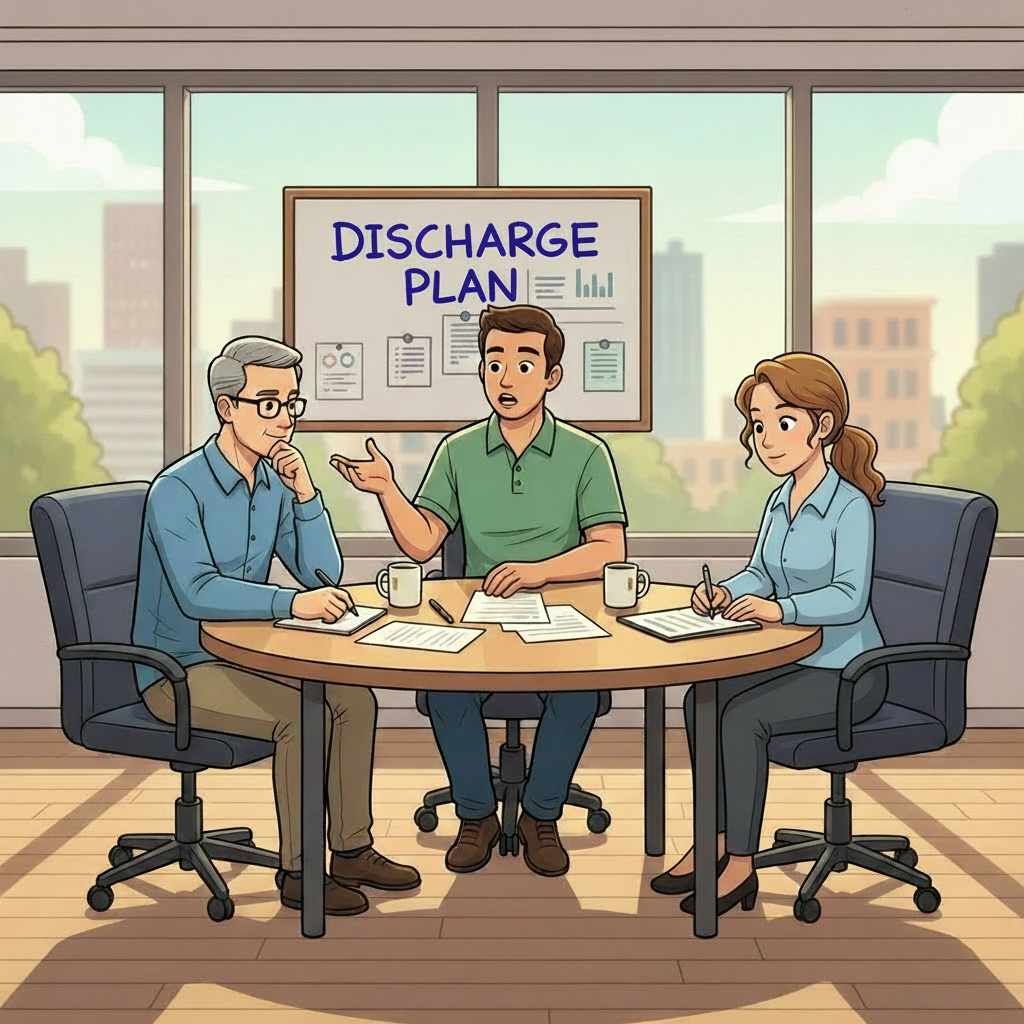
What is Delayed Discharge?
Delayed discharge occurs when a person has been assessed as medically fit to leave the hospital but cannot be discharged because the necessary support, placement, or care plan is not yet in place. This might mean waiting for a community placement, a social care package, housing, or specialist support, even though hospital treatment is no longer needed.
In practice, delayed hospital discharge often affects people who need more than short-term medical care to live safely and well, including autistic people, people with a learning disability, older adults, and those with mental health needs. What begins as a necessary admission can drift into an extended stay that limits rehabilitation, disrupts daily life, and exposes the person to risks not present in a well-supported community setting.
Why Delayed Discharge is a Growing Concern?
People who stay in the hospital longer than clinically required face higher risks of hospital-acquired infections, functional decline, loss of independence, and deterioration in mental health. At the same time, each occupied bed limits hospital capacity for other services, prolongs waiting times, and can increase staff stress and burnout. National reviews continue to show sustained levels of delayed discharge in the UK despite policy efforts, driven by workforce challenges, social care pressures, and limited step-down provision. For commissioners, providers, and families alike, delayed discharge is now recognised as a long-term harm event, not just an administrative delay.
Why Does Delayed Discharge Happen?
Reasons why people cannot be easily discharged from the hospital may be numerous. They arise from a combination of clinical, social, and system-level factors contributing to a significant number of delayed discharges. These can include incomplete discharge planning, late involvement of community teams, and limited access to intermediate care, rehabilitation, or step-down services.
In health and social care, for people with multiple needs in complex situations, delays are often linked to difficulties securing appropriate housing, specialist placements, or the right community support package to manage increased risk safely outside the hospital. In mental health and learning disabilities services, a lack of personalised community options and challenges with multi-agency coordination can keep people in hospital environments long after they would benefit from being supported elsewhere.
Housing and Placement Shortages
People often wait for months in hospital beds until an appropriate space becomes available. Limited availability of supported living, rehabilitation bed shortages, and a finite choice of nursing homes and residential placements mean that people often wait for months to reach a homely setting or at least an intermediate care setting. This is particularly significant for autistic people and people with a learning disability, for whom generic placements may not be suitable or safe, and where bespoke packages take time to commission and organise.
Funding and System-level Barriers
Funding arrangements and broader system-level barriers also pose major challenges to efforts to reduce hospital discharge delays. Assessments for social care funding, continuing healthcare, or specialist placement approvals can be complex and time-consuming, especially when multiple agencies are involved, and budgets are under pressure.
Differences in eligibility criteria, competing priorities, and fragmented commissioning structures can all delay agreement on who will fund what type of support, even when everyone recognises that the hospital is no longer the best place for the person. These funding decisions directly shape the availability and timing of community packages, which in turn affect how quickly someone can be discharged home.
Communication Gaps Between Services
Communication gaps between services often sit at the heart of delayed discharge, especially between commissioners and care providers. When information is incomplete, delayed, or inconsistently shared, it becomes more difficult to develop accurate care plans, risk assessments, and community provision that genuinely match the person’s needs.
Differences in language, expectations, and poor-quality processes among hospital teams, local authorities, integrated care boards, and community providers can slow decision-making and lead to repeated assessments. Misunderstandings regarding risk, funding responsibilities, or required levels of support can cause further delays, even when all parties share the intention of supporting a safe discharge.
Psychological and Emotional Long-Term Effects
Prolonged stays in hospital settings can significantly affect people’s mental well-being, especially when they feel “stuck” despite being medically fit for discharge. Many describe heightened anxiety about their future, uncertainty about where they will live, and fear that they have lost control over key decisions about their lives. Over time, this can erode trust in services and undermine confidence in the transition process, making future changes more stressful.
Extended periods in institutional environments can also trigger or worsen depression. Being away from home, community networks, and everyday roles often leads to a sense of loss, including loss of identity. The absence of familiar routines, meaningful activities, and opportunities to make everyday choices can feed feelings of hopelessness and low mood, which may persist even after they leave the hospital.
Delayed discharge can intensify social isolation and a sense of helplessness. Limited visiting, disrupted relationships, and reduced community contact can leave people feeling disconnected from the life they knew prior to admission. Some people report feeling that decisions are made about them rather than with them, which can contribute to powerlessness and emotional distress.
Physical Long-Term Effects on Well-Being
Physically, delayed discharge is associated with functional decline, muscle loss, and reduced mobility. Hospital routines often restrict opportunities for independent movement, especially when staffing levels are stretched or the environment is not designed to promote activity. Even a few extra weeks of low activity can lead to muscle deconditioning, slower reaction times, and reduced balance, increasing the risk of falls and making rehabilitation more challenging.
Remaining in hospital longer than needed also increases the risk of hospital-acquired infections and other complications, such as delirium, pressure sores, and venous thrombosis, particularly for older adults and people with multiple long-term conditions. These complications may prolong recovery, create new health problems, and diminish overall resilience upon return to the community. In some cases, the physical impact of a prolonged hospital stay can be more disabling than the condition that led to admission in the first place.
Daily living skills can deteriorate when care recipients spend extended periods in settings such as community hospitals and nursing homes. In these places, caregivers perform many daily tasks on their behalf. Cooking, medication management, budgeting, and personal care are often delegated to staff, leaving fewer opportunities to practise and maintain the skills required for independent or supported living.
Impact on Independence and Quality of Life
Over time, the combined psychological and physical effects of delayed discharge can significantly reduce independence and quality of life. Loss of mobility, low confidence, and deteriorating mental health can all limit how far someone feels able to participate in community life, return to education or employment, or reconnect with relationships and hobbies.
For some, hospital discharge delays change expectations about what is possible in their future. If a person becomes reliant on institutional routines, they may find it harder to trust their own abilities or to see themselves as capable of living with greater autonomy. This can lead to increased reliance on formal services later, when they return to community life.
Ethical and Human Rights Considerations
Prolonged hospital stays raise important ethical and human rights questions, including the right to live in the least restrictive environment and to participate fully in community life. When people remain in hospital predominantly because of gaps in housing, social care, or commissioning, rather than clinical need, their liberty and autonomy may be restricted beyond what is justified for their health.
For autistic people and people with a learning disability, there is growing recognition that long inpatient stays can amount to inappropriate institutionalisation and may breach commitments under human rights and equality legislation. Ethical practice demands that systems prioritise timely access to appropriate community care services, involve the person and those close to them in decision-making, and regularly review whether the hospital remains the appropriate setting.
Role of Community and Social Care Services
Community and social care services are central to preventing delayed discharge and reducing its long-term effects. Well-coordinated community-based care can provide the rehabilitation, emotional support, and practical assistance needed to help people recover closer to home and maintain their independence. This includes access to occupational therapy, mental health nurses, social services, and support workers who can work alongside the person in their own environment.
Integrated, person-centred planning that begins early in the hospital stay helps ensure that community health services are ready when the person is clinically fit to leave. Effective partnerships among NHS England teams, local authorities, and voluntary or independent sector providers can create smoother pathways, reduce gaps in support, and enable people to transition into community settings that more closely reflect their preferences, cultures, and goals.
Where Nurseline Healthcare Steps In?
Nurseline Healthcare focuses on bridging the gap between hospiral and community so that people are not left waiting in the wrong setting when they are ready to move on. The team works alongside health and social care professionals and partners to plan early, communicate clearly, and build appropriate community support around each person, turning the discharge process into a gradual, well-prepared transition rather than a last-minute move.
In practice, Nurseline Healthcare implements several proven strategies in reducing delayed discharge. We initiate person-led discharge planning as early as possible by listening carefully to what a safe and meaningful life after hospitalisation looks like for the person we support. Nurseline Healthcare’s support team provides detailed, person-centred care, risk assessments, and clear timelines, enabling commissioners to make confident funding and placement decisions without unnecessary delay. They help identify housing, placement, and support needs at the outset, linking with community, housing, and social care teams to explore suitable options while treatment is still underway.
Nurseline Healthcare also supports stronger co-production by serving as a consistent point of contact among ward teams, commissioners, and community providers, thereby reducing miscommunication and the repetition of assessments. Staff use accessible, strengths-based language and regular updates to keep people and families informed, reassure them about progress, and address concerns before they escalate. By investing in community capacity through skilled, flexible support in people’s own homes, Nurseline Healthcare helps prevent delayed discharges and avoidable readmissions, so the hospital becomes a short chapter, not a long-term destination.
Community Transitions Services with CTS by Nurseline Healthcare
CTS by Nurseline Healthcare is designed specifically to reduce the risks associated with delayed discharge and to create a smoother, more predictable pathway into community life. CTS brings together skilled support workers, therapists, and clinical professionals who collaborate with hospitals, commissioners, and families to design personalised care plans. These plans consider physical health and mental health needs, sensory profiles, communication preferences, and environmental requirements to ensure the new setting is established for success from day one.
Key features of CTS by Nurseline Healthcare include:
- Person-centred planning that begins before the discharge process, with active involvement of the person and their family members.
- Comprehensive risk assessments that identify potential barriers to safe discharge and put proactive strategies in place, such as crisis plans and medication support.
- Consistent support teams who work across hospital and community settings, offering continuity of care and reducing anxiety during the move.
- Ongoing, holistic support after discharge, focusing on building daily living skills, supporting emotional well-being, and promoting participation in community life.
By focusing on safe, timely discharges and sustainable community support, CTS by Nurseline Healthcare helps mitigate the long-term harms of delayed discharge, protect people’s rights, and encourage a future in which independence, connection, and quality of life are central to every care journey.
Contact us to plan transitions, prevent delays and ensure quality support today.