
Why Post-Discharge Support Is Critical in the UK?
Post-discharge support services are not supplementary add-ons to hospital care; they are an extension of it. The period immediately following discharge is among the most clinically vulnerable in a person’s recovery. Around one in five people discharged from an acute mental healthcare unit in England were readmitted within just six months, with a median time to readmission of only 34 days. That figure alone signals how fragile the post-discharge period can be when adequate support structures are not firmly in place.
The NHS is under significant pressure to discharge people swiftly, with delayed discharges costing over £2 billion a year. This pressure means that hospital beds are being freed up before robust community care arrangements have been confirmed, placing enormous strain on individuals, families, and an already stretched network of care services. Speed without proper community follow-through shifts the problem rather than resolves it.
What Happens After Hospital Discharge?
When a person is discharged from an NHS hospital, their care transitions from a secondary care setting, such as an acute care environment, to community or home-based support. This may involve a GP taking over prescribing responsibilities, referrals to community mental health teams, occupational therapy, district nursing, or the arrangement of personal home care. Under the Discharge to Assess (D2A) model, widely adopted by NHS England, people are discharged from hospital before their long-term care needs are fully assessed, with the assessment taking place in the community. In principle, the model supports the timely discharge process and improves flow through hospital systems. In practice, it requires flawless coordination among hospital staff, local authorities, community providers, and support services to ensure safe operation.
The Department of Health and Social Care’s hospital discharge and community support guidance, updated in January 2024, sets out how health and care systems should work together for safe, timely discharge. It places a clear duty on NHS trusts and foundation trusts, introduced under the Health and Care Act 2022, to involve patients and carers in discharge planning. For many people, however, particularly those with complex mental health needs, learning disabilities, or multiple physical health conditions, this transition remains far from smooth.
The Risks of Poorly Managed Discharge
When discharge is rushed or poorly coordinated, the risks are wide-ranging. For people with mental health conditions, the risk is even more acute; the period immediately after discharge carries an elevated risk of suicide and relapse, which is precisely why NHS Standard Contract guidance requires follow-up within 72 hours of discharge. Yet a 2025 Care Quality Commission (CQC) report found that only 73% of mental health patients actually received that follow-up within the recommended timeframe.
Medication errors represent another serious and underreported risk in the post-discharge period. It is estimated that they are contributing to more than a thousand deaths each year. Also, the risk of deterioration in physical and mental health is compounded when people return home without the right professional oversight, personalised care plans, or the involvement of family members in managing complex daily needs.
Common Gaps in Post-Discharge Support
Despite policy commitments to joined-up care and person-centred discharge planning, the same gaps reflect systematic pressures, communication failures, and a persistent disconnect between what hospital staff plan and what community care services can actually deliver.

Poor Communication Between Hospital and Community Services
Effective discharge planning depends on clear, timely information sharing between hospital staff and the full range of community professionals involved in providing the person’s ongoing care needs, which includes:
- General Practitioners
- Community Nurses
- Mental Health Teams
- Social Workers
- Home Care Providers
In reality, this information exchange is frequently delayed, incomplete, or lost altogether. Many healthcare teams face systematic barriers, including time constraints and differing protocols between secondary and primary care, that make seamless handover extremely difficult. When a GP receives a discharge summary days after someone has already returned home, or when a community mental health team has no record of a changed medication plan, the person is left in a dangerous information vacuum. These communication failures do not just affect clinical decisions; they affect whether people are contacted at all and whether early warning signs are recognised before they become crises.
Inadequate Involvement of Families and Carers
Family members are often the primary support system once someone returns home from the hospital, yet they are frequently the last to be informed and the least prepared. According to Catalyst Care Group’s White Paper Publication 2025, half of family carers were not appropriately informed about decisions regarding the care plan or the discharge process. When communication breaks down at such a critical moment, families are left feeling lost and unsure of what help will be available or how care will continue once hospital treatment ends. Without a clear plan, many describe being overwhelmed and anxious, uncertain about who to turn to or what to do next.
When family members are excluded from discharge conversations, they are left managing complex care responsibilities without adequate training, context, or support. This leaves them managing unfamiliar medication routines, physical care needs, or complex mental health presentations with little to no guidance from hospital staff, leading to risk of deterioration and readmission.
Insufficient Mental Health Support
For people leaving a mental health inpatient ward, the days immediately after discharge are among the most vulnerable in their recovery. Yet, access to community mental health support services is frequently delayed, inconsistent, or not arranged before someone leaves the hospital. Without a named contact, a clear follow-up plan, or a smooth handover between secondary and primary care, people can quickly feel abandoned by the system that has just been treating them. The gap between inpatient and community care is where crises so often begin, not because recovery was impossible, but because adequate support needed to sustain it was never properly put in place.
Delays in Arranging Home Care
Sourcing appropriate home care services before discharge remains one of the most persistent practical failures in the post-discharge process. When a care service is not confirmed in advance, people either remain in hospital beds longer than necessary or go home to a period of uncertainty while arrangements are still being made. For older people or those with significant physical or cognitive needs, even a short gap in social care services can lead to falls, missed medications, or a rapid deterioration in well-being. Capacity shortfalls in home care intermediate care services mean this problem is not isolated, as it affects thousands of people each week across England.
Lack of Personalised Care Plans
Without a clear, individual care plan in place at the point of discharge, the parties involved cannot make fully informed decisions, and different professionals often act on different assumptions. One team may believe a GP is managing medication reviews, while the GP may be waiting on a referral that was never sent. Family members may not know who to contact if something changes. The person themselves may have left the hospital with a discharge letter they did not fully understand and without a sense of what comes next. A well-constructed care plan, developed with input from the person, their family members, hospital staff, and relevant community support services, removes this ambiguity. It gives everyone involved a shared reference point and a clear line of responsibility, enabling them to make informed choices about the discharge.
Medication Mismanagement
Medication changes are common at the point of discharge, and managing them safely at people’s own homes is harder than it sounds. Dose adjustments, newly prescribed medicines, and discontinued treatments require clear communication between hospital staff and primary care prescribers, as well as practical support for the person at home. For people managing several long-term conditions, or those with cognitive difficulties or mental health needs, the complexity can quickly become unmanageable without adequate support from care services that take the time to sit with them, explain what each medication does, and monitor how they are coping.
The Impact of These Gaps on People and Families
The consequences of failing to address these gaps are felt most acutely by those who have just left the hospital and their family members. From the physical setbacks to emotional exhaustion, the consequences of inadequate discharge management extend broadly across the system.

Increased Risk of Readmission
Readmission is perhaps the most measurable consequence of inadequate post-discharge support. For people with complex or chronic conditions, returning to hospital within days or weeks of discharge is the result of a gap in care services that was never filled. A missed follow-up appointment, an unmanaged medication change, or a week without adequate support at home can be enough to undo the progress made during a hospital stay. Every unnecessary readmission places further pressure on social services, delays care for others, and, most importantly, represents a failure to support someone’s recovery at the point when they most need it.
Emotional and Physical Strain on Families
Family members and unpaid carers who continue supporting people in their own homes absorb much of the pressure when professional support is absent or delayed. The majority are not given sufficient training, information, or even advance notice before their loved one arrives home from the hospital. The physical demands of caring for someone who has recently been discharged with unresolved or complex needs can quickly lead to burnout, anxiety, and depression among family carers. When carers themselves become unwell or unable to continue, the risk of readmission rises sharply.
Reduced Quality of Life
Beyond the clinical metrics, poor discharge planning affects quality of life in ways that are harder to quantify but no less serious. People who still require support may return home without the mobility aids, mental health follow-up care, or personal care services they were promised. Some face weeks of confusion about medications, cancelled appointments, or the distress of being passed between support services without anyone taking clear responsibility for their care. For people in complex situation with multiple needs, this experience can:
- undermine confidence
- reduce independence
- increase social isolation
How to Prevent Gaps in Post-Discharge Support
Preventing gaps requires more than good intentions. It demands structural changes to how discharge is planned, who is involved, and when care services are put in place, spanning hospital staff, community providers, primary care and support, and families alike.
Based on our experience and feedback from multiple families included in the Catalyst Care Group White Paper Publication Survey 2025, we received varied perspectives on community care and post-discharge support. Some spoke of positive, well-coordinated support that eased daily challenges, while others highlighted issues with communication and reliability. This inconsistency underscores the need for more dependable, high-quality services that provide continuity, compassion, and genuine collaboration with families. Personal connections, flexibility, and trust within home support teams were especially valued.
Improving Communication and Care Coordination
Standardised communication protocols between hospital teams and community support services are one of the most effective mechanisms for preventing care gaps. The Department of Health and Social Care’s hospital discharge guidance explicitly calls for senior leadership from NHS providers and local authorities to monitor discharge processes, and for clear role definition across all organisations involved. Practically, this means:
- discharge summaries reaching primary care professionals on the day of discharge rather than days after;
- shared care records that follow the person rather than staying with the institution;
- named professionals taking clear responsibility for follow-up across both primary and secondary care.
Timely Access to Community Services
Access to community care services must be arranged before a person leaves the hospital. The D2A model, when properly resourced, supports discharge planning in its full capacity. Intermediate care services play a particularly important role here: offering short-term, rehabilitative support that bridges the gap between acute hospital care and long-term arrangements at home, typically provided free of charge for up to six weeks, under the Care Act 2014. The focus of this period is to provide reablement services:
- Helping people regain confidence
- Rebuild daily skills
- Recover independence in a familiar environment
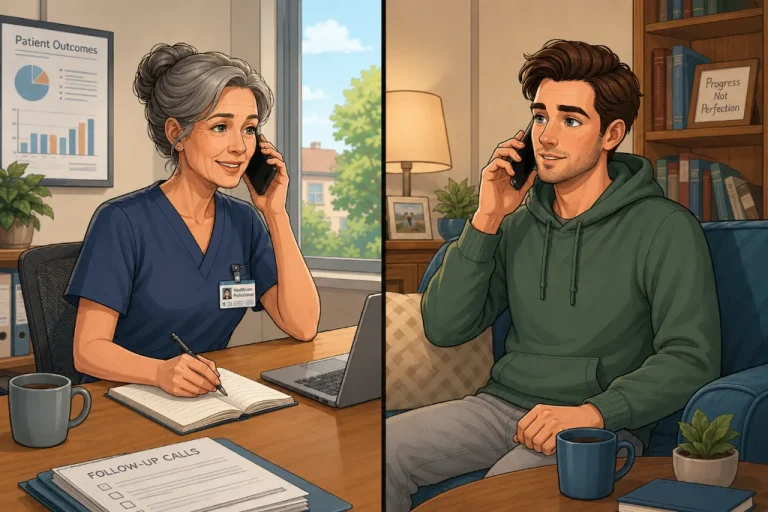
For people who need urgent support at home, whether in the days immediately following discharge or when a situation deteriorates, CTS by Nurseline Healthcare offer access to a range of healthcare professionals, including PBS specialists, nurses and therapists. We collaborate with Integrated Care Boards, local authorities, and partner care providers to ensure people are discharged safely to their homes.
Involving Families Early in the Process
Family members must be brought into discharge planning from the outset. The Health and Care Act 2022 places a statutory duty on NHS trusts to involve carers in the discharge process. In practice, this means hospital teams contacting family members early:
- explaining what care will be needed at home,
- providing written information about medications and warning signs,
- offering referrals to carer support services.
The Role of Home Care Providers in Bridging the Gap
Home care providers occupy a critical position in the post discharge care pathway, often stepping in precisely where the NHS and the social care system leave off. For people in complex situations with multiple needs, continuity of care and further help are a clinical necessity. Research consistently shows that frequent changes in care workers are unsettling for people who have experienced trauma, mental health crises, or prolonged hospital stays, making familiar faces and consistent approaches a genuine therapeutic asset. A good home first approach:
- Monitors changes in health status
- Flags early deterioration to clinical teams
- Supports medication management
- Ensures that people attend their follow-up appointments

Support workers who know a person well, including their preferences, triggers, and daily routines, are in a unique position to spot when something is not right and to act before it becomes an emergency. For people with complex mental health needs, physical disabilities, learning disabilities, or acquired brain injuries, home-based support often needs to extend beyond personal care into active clinical management, such as:
- Supporting medication regimens
- Assisting with therapeutic activities recommended by occupational therapists
- Facilitating access to community mental health services
- Providing the kind of service after a difficult period in the hospital
The broader system gains when home care providers collaborate closely with NHS teams, GPs, and social care professionals. Consistent information-sharing between home care workers and clinical teams, along with regularly updated and accessible care plans, helps close the gaps that often lead to readmissions. In this way, effective home care plays a crucial role in ensuring safe outcomes for people once they leave the hospital.
These findings are also confirmed by the respondents of the Catalyst Care Group White Paper Survey 2025. Their most common recommendation was increased community investment (62.5%), transparent communication (43.8%), enhanced staff training (37.5%), and stronger social inclusion (37.5%).
How Nurseline Healthcare Can Help
Nurseline Healthcare provides home care services specifically designed to support people through the most vulnerable period of their recovery, the weeks and months following hospital discharge. With a multidisciplinary team that includes community psychiatric nurses, support workers, therapists, and clinical leads, our expert care bridges the gap between hospital-based care and life at home, offering expertise and coordination that standard discharge pathways often cannot provide.
Whether a person needs a few hours of support each week or a comprehensive package of wraparound care, our team is equipped to respond with the right level of resource at the right time. If you would like to find out more about how Nurseline Healthcare can provide safe post-discharge support, get in touch with our team today.